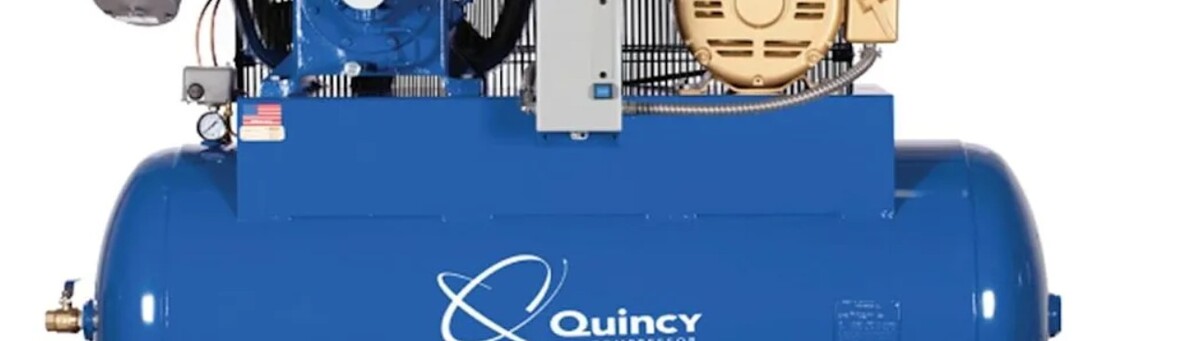
Quincy Air Compressor Pilot Valve Adjustment for continuous operation
February 7, 2026Constant speed control is an air compressor control method in which the compressor motor runs continuously while adjusting the compressor load to match air demand. Instead of starting and stopping repeatedly, the system uses a load/unload compressor control mechanism to regulate output. When air demand drops, the compressor unloads and consumes less power. When demand rises, it reloads and resumes full capacity.
In a compressor using constant speed control, the electric motor operates at fixed revolutions per minute (RPM). A control valve or unloading mechanism determines whether the compressor is compressing air (loaded) or idling (unloaded). When the system reaches the set pressure, the compressor unloads so that air is still drawn in but not compressed, reducing load on the system. When pressure falls below a set point, the compressor reloads and begins compressing again.
Constant speed control offers several advantages, particularly for installations with steady or semi-continuous air use. Compared to start/stop systems, it provides smoother operation, reduces electrical stress and extends motor life.
Industries that rely on uninterrupted air supply, such as automotive assembly, food and beverage processing, and industrial manufacturing, often prefer this method. It’s also common in systems using nitrogen boosters, where maintaining stable pressure is critical to product quality and safety.
https://www.quincycompressor.com/resource/glossary/constant-speed-control/